Jewellery can instantly change the look of an outfit. A simple pendant can make a kurti look polished, while statement earrings can lift a festive or family-function outfit within seconds. But when buying fashion jewellery, many women come across two common categories: anti-tarnish jewellery and regular imitation jewellery.
At first glance, they may look similar. Both can offer stylish designs, affordable pricing, and versatility for everyday or occasional wear. However, the real difference becomes clear over time. Some pieces keep their shine longer, while others begin to dull, fade, or discolour after repeated use.
That is why understanding anti tarnish jewellery vs imitation jewellery is important before making a purchase.
If you are wondering which one is better for daily wear, which is more durable, or which type gives better value for money, this guide will help you compare both clearly.
What Is Regular Imitation Jewellery?
Regular imitation jewellery is made to recreate the look of precious jewellery without using real gold, silver, or gemstones.
It may be made from materials such as:
- Alloy metals
- Brass
- Copper-based metals
- Zinc alloys
- Artificial stones
- Synthetic pearls
- Glass embellishments
- Gold-tone or silver-tone plating
Imitation jewellery is popular because it offers a wide variety of styles at affordable prices. From trendy earrings and pendants to festive necklace sets and bangles, it allows women to experiment with different looks without investing in expensive fine jewellery.
However, the finish and durability of imitation jewellery can vary a lot depending on the quality of the base material and plating.
What Is Anti-Tarnish Jewellery?
Anti-tarnish jewellery is jewellery designed to resist dullness, fading, and discolouration for a longer time than standard fashion jewellery.
This can be achieved through:
- Stainless steel base material
- Protective coatings
- PVD plating
- Surface-sealing techniques
- Corrosion-resistant finishes
This does not mean the jewellery will remain unchanged forever. It simply means it has been made to handle everyday wear better than many regular imitation pieces.
That is the core difference in the anti tarnish jewellery vs imitation jewellery comparison.
Why Does Jewellery Tarnish?
Before comparing the two, it helps to understand why jewellery tarnishes at all.
Tarnishing happens when metal or metal plating reacts with outside elements.
Moisture and Humidity
Water and humidity can affect many jewellery finishes, especially when exposure is repeated.
Sweat
Sweat contains moisture and salts that can gradually affect jewellery surfaces.
Perfume and Cosmetics
Perfume, lotion, deodorant, hairspray, and makeup can leave residue on jewellery and may weaken the finish over time.
Air Exposure
Some metals react with oxygen and other environmental compounds, leading to dullness or colour change.
Chemicals
Household cleaners, detergents, chlorine, and similar chemicals can damage the surface of jewellery.
This is why some pieces lose their shine faster than others.
Anti-Tarnish Jewellery vs Imitation Jewellery: The Main Difference
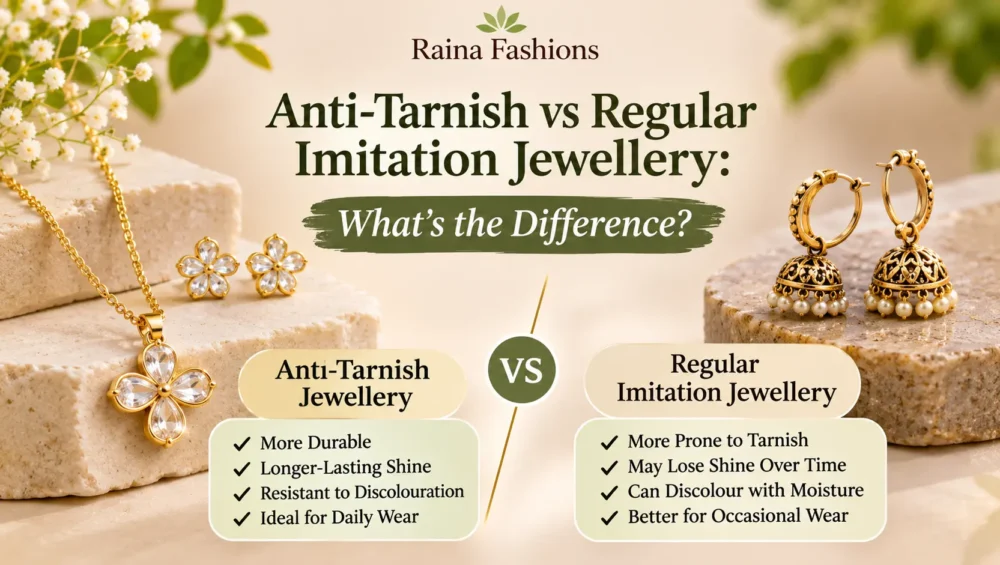
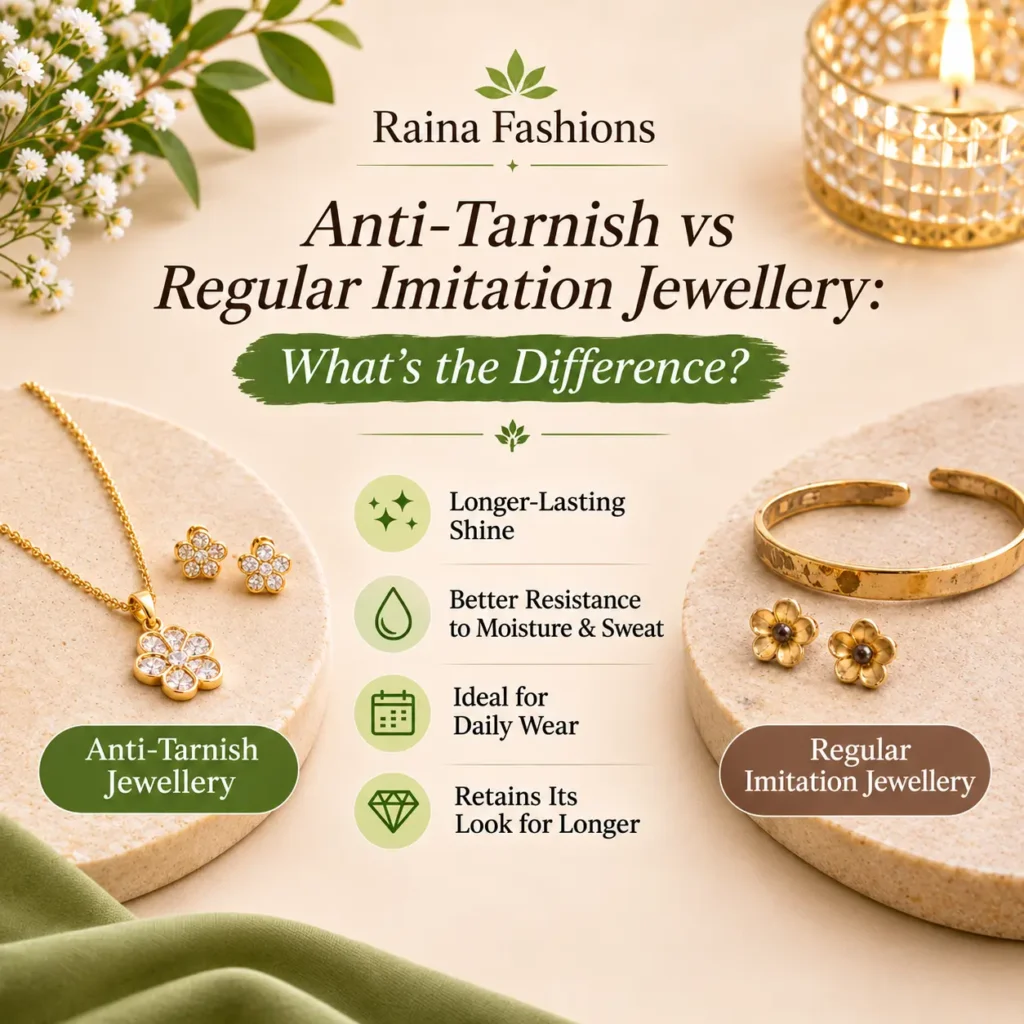
The key difference lies in how the jewellery is made and how well it holds up with use.
| Feature | Anti-Tarnish Jewellery | Regular Imitation Jewellery |
|---|---|---|
| Tarnish resistance | Designed to resist tarnishing for longer | May tarnish faster depending on finish |
| Base material | Often stainless steel or treated metal | Often alloy, brass, copper mix, or plated base metals |
| Everyday use | Generally more suitable | Depends on product quality |
| Finish durability | Usually more durable | Can vary a lot |
| Maintenance | Lower maintenance, but care still needed | Often needs more careful use |
| Style range | Modern, minimal, growing variety | Very wide, especially festive styles |
| Price | Often slightly higher | Usually budget-friendly |
So, the anti tarnish jewellery vs imitation jewellery choice depends on your lifestyle, budget, and how often you plan to wear the piece.
What Makes Anti-Tarnish Jewellery Different?
Anti-tarnish jewellery is often chosen for regular use because it is designed to handle repeated wear better.
Stainless Steel Base
Many anti-tarnish pieces use stainless steel as the base material.
Stainless steel is valued because it is:
- Durable
- Strong
- More resistant to corrosion
- Suitable for regular wear
- Good for necklaces, earrings, bracelets, and pendants
This makes it a popular choice for minimal everyday jewellery.
Protective Coatings
Some anti-tarnish jewellery includes a protective coating that acts as a barrier between the metal and external elements such as moisture, sweat, and air.
This helps slow down the tarnishing process.
PVD Plating
PVD, or Physical Vapour Deposition, is a plating process used in some anti-tarnish jewellery. It is often considered more durable than standard plating methods.
This does not make the jewellery indestructible, but it can make the finish last longer.
What Makes Regular Imitation Jewellery Different?
Regular imitation jewellery is often more design-driven than durability-driven.
It is commonly used for:
- Trendy styles
- Statement jewellery
- Festive sets
- Heavy traditional designs
- Occasional-wear accessories
It is ideal when you want visual variety at a lower price point.
However, many regular imitation pieces may need extra care because they can be more affected by sweat, moisture, perfume, and storage conditions.
Which Is Better for Daily Wear?
If you wear jewellery regularly, anti-tarnish jewellery is often the more practical option.
Why Anti-Tarnish Jewellery Works for Daily Wear
It is often better for:
- Office wear
- College
- Shopping
- Casual outings
- Travel
- Everyday kurtis
- Co-ord sets
- Daily minimal styling
A pair of anti-tarnish earrings, a simple necklace, or a bracelet can be worn repeatedly with less concern about losing shine too quickly.
Can Regular Imitation Jewellery Be Worn Daily?
Yes, but it depends on the product quality.
Some well-made imitation jewellery can work for daily wear, but frequent use may affect the finish faster than anti-tarnish options.
If you wear the same piece very often, anti-tarnish usually offers more convenience.
Which Is Better for Festive Wear?
This is where regular imitation jewellery has a strong advantage.
Traditional imitation jewellery often comes in a much wider range of festive and ornate styles such as:
- Jhumkas
- Chandbalis
- Kundan-inspired earrings
- Heavy necklace sets
- Bangles
- Layered designs
- Traditional statement pieces
These are perfect when you want a stronger ethnic or occasion-wear look.
Anti-Tarnish Jewellery for Festive Styling
Anti-tarnish jewellery can also work for festive outfits, especially when you prefer:
- Lightweight festive styling
- Contemporary ethnic looks
- Minimal festive jewellery
- Delicate necklaces
- Crystal accents
- Elegant drop earrings
So when comparing anti tarnish jewellery vs imitation jewellery, the better festive option depends on whether you want traditional heaviness or modern elegance.
Which One Lasts Longer?
In general, anti-tarnish jewellery is designed to last longer in terms of appearance.
That is because it often uses:
- Better base materials
- Better coatings
- Better plating processes
- More resistance to tarnish-causing elements
Regular imitation jewellery can also last well if handled carefully, but its finish may be more delicate.
Still, durability depends on several things:
- Product quality
- Frequency of wear
- Exposure to water or perfume
- Storage habits
- Skin chemistry
- Care routine
No fashion jewellery category is completely maintenance-free.
Does Anti-Tarnish Jewellery Never Tarnish?
No.
This is important to understand.
Anti-tarnish means tarnish resistant, not tarnish proof.
Even anti-tarnish jewellery can be affected over time by:
- Moisture
- Sweat
- Perfume
- Chemicals
- Rough handling
- Poor storage
So while it may hold up better, it still needs basic care.
Is Anti-Tarnish Jewellery Waterproof?
Not always.
Many people confuse anti-tarnish with waterproof, but they are not the same thing.
A piece may resist tarnishing better than regular imitation jewellery, but that does not automatically mean it should be worn constantly in water.
It is still safer to remove jewellery before:
- Swimming
- Long showers
- Gym workouts
- Cleaning with chemicals
This helps preserve the finish.
Which One Gives Better Value for Money?
This depends on how you wear jewellery.
Anti-Tarnish Jewellery Gives Better Value If:
- You wear jewellery often
- You want repeatable everyday pieces
- You prefer minimal designs
- You want lower-maintenance jewellery
- You want one piece to work with many outfits
Regular Imitation Jewellery Gives Better Value If:
- You wear statement jewellery occasionally
- You want traditional festive styles
- You like changing trends often
- You want more designs at lower prices
- You need jewellery mainly for functions or events
The smarter choice depends on your wardrobe habits.
How to Style Anti-Tarnish Jewellery
Anti-tarnish pieces are usually very versatile.
With Kurtis
Try:
- Small hoops
- Stud earrings
- Delicate pendants
- Minimal bracelets
These work especially well with printed kurtis, cotton kurtis, and office wear outfits.
With Co-ord Sets
Modern anti-tarnish jewellery pairs beautifully with co-ords.
Choose:
- Fine chains
- Sleek bracelets
- Elegant drop earrings
With Casual Western Wear
Anti-tarnish jewellery also works well with dresses, shirts, tops, and jeans.
This makes it ideal for women who want jewellery that goes beyond only ethnic outfits.
How to Style Regular Imitation Jewellery
Regular imitation jewellery is ideal when you want stronger decorative impact.
With Plain Kurtis
Use:
- Statement earrings
- Bold necklace
- Traditional bangles
With Festive Suits
Jhumkas, chandbalis, and necklace sets can complete the outfit beautifully.
With Family Function Outfits
Choose one statement piece and keep the rest of the styling balanced.
This helps the jewellery stand out without making the outfit look overloaded.
How to Care for Both Types of Jewellery
Whether you choose anti-tarnish or regular imitation jewellery, proper care matters.
Apply Perfume Before Jewellery
Let perfume or lotion dry first, then wear your jewellery.
Wipe After Use
A soft, dry cloth can help remove sweat, oils, and product residue.
Store Separately
Keep pieces in pouches or compartments to reduce scratching and friction.
Avoid Harsh Chemicals
Remove jewellery before cleaning, swimming, or using detergents.
Keep It Dry
Do not expose jewellery to unnecessary moisture.
These simple habits can help both anti-tarnish and imitation jewellery last longer.
Should You Keep Both in Your Collection?
Yes, for many women that is the best approach.
A balanced jewellery collection could include:
Anti-Tarnish Jewellery For:
- Everyday wear
- Office outfits
- Travel
- Minimal styling
- Repeat use
Regular Imitation Jewellery For:
- Weddings
- Festivals
- Family functions
- Traditional outfits
- Statement styling
This gives you flexibility across occasions.
Conclusion
The biggest difference in anti tarnish jewellery vs imitation jewellery comes down to durability, material quality, and intended use.
Anti-tarnish jewellery is usually the better option for women who want practical, repeatable, and lower-maintenance jewellery for everyday wear. It is often made using more durable materials such as stainless steel and may include coatings or plating that help it resist dullness for longer.
Regular imitation jewellery, on the other hand, offers greater variety in trendy, festive, and traditional styles. It can be a great choice for special occasions, statement looks, and budget-friendly styling.
At Raina Fashions, we believe the best jewellery is the one that suits your wardrobe and your lifestyle. If you wear jewellery often, anti-tarnish pieces can be very useful. If you love festive styling, regular imitation jewellery still has an important place in your collection. In many cases, having both gives you the best of both worlds.
Frequently Asked Questions
What is the difference between anti-tarnish jewellery and imitation jewellery?
Anti-tarnish jewellery is designed to resist dullness and discolouration for longer, while regular imitation jewellery may be more prone to tarnishing depending on the metal and plating.
Is anti-tarnish jewellery better for daily wear?
Yes, in many cases it is more practical for regular use because it is made to handle repeated wear better than many standard imitation pieces.
Does anti-tarnish jewellery last forever?
No. It is resistant to tarnishing, not completely immune. Its durability still depends on use, care, and exposure to moisture or chemicals.
Is regular imitation jewellery good for festive wear?
Yes. Regular imitation jewellery is often available in more elaborate traditional and festive designs, making it a popular choice for special occasions.
Can I wear anti-tarnish jewellery with kurtis?
Yes. Anti-tarnish earrings, pendants, and bracelets pair well with kurtis, co-ord sets, and everyday ethnic wear.
How should I store imitation jewellery?
Store it in a dry place, preferably in individual pouches or jewellery compartments, away from moisture, perfume, and harsh chemicals.
Which is more affordable: anti-tarnish or regular imitation jewellery?
Regular imitation jewellery is usually more budget-friendly. Anti-tarnish jewellery may cost a little more because of its materials and finish.