A well-planned ethnic wardrobe should make getting dressed easier, not more complicated.
You do not need dozens of kurtis, multiple festive suits, and a cupboard full of accessories to create variety. The better approach is to build a collection of pieces that can work across office days, casual outings, family gatherings, festive occasions, travel, and everyday wear.
That is what makes ethnic wear for women so versatile. A straight kurti can be paired with trousers for work, jeans for a casual outing, or a festive dupatta and jewellery for a family function. A co-ord set can be worn together or split into separate outfits. Even a simple cotton kurti can look completely different depending on the accessories.
The key is choosing pieces that work hard in your wardrobe.
Here is how to build a versatile ethnic wear collection without overbuying.
Start With Your Lifestyle
Before buying anything, think about where you actually spend most of your time.
Do you need outfits mainly for:
- Office
- Everyday errands
- Family gatherings
- Festive occasions
- Travel
- College
- Casual outings
- Work-from-home days
Your wardrobe should reflect your real routine.
For example, if you wear ethnic clothing to work several times a week, invest more in comfortable cotton kurtis, straight-cut styles, and easy-to-match bottoms. If you mostly wear ethnic clothing for gatherings and celebrations, you may need fewer pieces but slightly dressier ones.
A good collection of ethnic wear for women should feel relevant to your lifestyle rather than being built around occasional trends.
Build Around Neutral Basics First
Neutral pieces are easier to repeat because they can be styled with different colours and accessories.
Start with a few dependable shades such as:
- Ivory
- Beige
- Black
- Navy
- Olive
- White
- Brown
These colours create a strong foundation.
A cream kurti, for example, can work with:
- Printed dupatta
- Maroon pants
- Olive palazzos
- Gold-tone jewellery
- Colourful juttis
One neutral piece can create several outfits when you change the styling around it.
Add a Few Strong Colours
Once your basics are in place, introduce colours that bring variety.
Good options include:
- Mustard
- Rust
- Wine
- Bottle green
- Maroon
- Teal
- Pink
- Lavender
Choose shades that you genuinely enjoy wearing and that work with several items you already own.
The goal is not to collect every trending colour. It is to create combinations that feel natural to you.
Keep Different Kurti Silhouettes
Having several identical straight kurtis can make even a large wardrobe feel repetitive.
A better approach is to include different silhouettes.
1. Straight Kurtis for Everyday and Office Wear
Straight-cut kurtis are among the most useful pieces in a wardrobe.
They work with:
- Straight pants
- Cigarette trousers
- Leggings
- Palazzos
- Jeans
Choose one or two in solid or subtle prints for regular wear.
For office outfits, pair them with minimal jewellery and loafers or flats.
For casual styling, switch to jeans and a sling bag.
2. A-Line Kurtis for Relaxed Dressing
A-line kurtis add movement and softness to an outfit.
They work especially well for:
- Casual outings
- Travel
- Weekend wear
- Family visits
Printed A-line kurtis are particularly useful because they need very little styling.
Pair them with straight pants, palazzos, or leggings.
3. Short Kurtis for Indo-Western Looks
Short kurtis help add variety to a wardrobe dominated by longer ethnic silhouettes.
Pair them with:
- Jeans
- Wide-leg pants
- Trousers
- Skirts
They are ideal for casual outings, college, shopping, and relaxed work environments.
A short kurti is also an easy way to create a modern fusion look without buying completely separate Western outfits.
Include Everyday Cotton Kurtis
Cotton kurtis are a practical core of ethnic wear for women because they suit regular use and warmer weather.
Look for:
- Pure cotton
- Cotton flex
- Mulmul
- Handblock cotton
- Breathable cotton blends
Choose styles that are easy to wash, comfortable to wear, and simple to repeat.
A few well-chosen cotton kurtis can cover office days, errands, travel, and casual outings.
Add One or Two Co-ord Sets
Co-ord sets add convenience and versatility at the same time.
Wear both pieces together when you want a complete coordinated outfit.
Then separate them.
Style the Top With:
- Jeans
- Plain trousers
- Palazzos
- Skirts
Style the Bottom With:
- Solid kurtis
- Short tunics
- Plain shirts
- Casual tops
This gives you more outfit combinations from fewer pieces.
A printed or embroidered co-ord can also work for small family functions with the right jewellery.
Keep One Lightweight Festive Set
Every wardrobe benefits from at least one outfit that works for:
- Puja
- Festival
- Anniversary
- Birthday dinner
- Small engagement
- Family function
You do not need an extremely heavy suit.
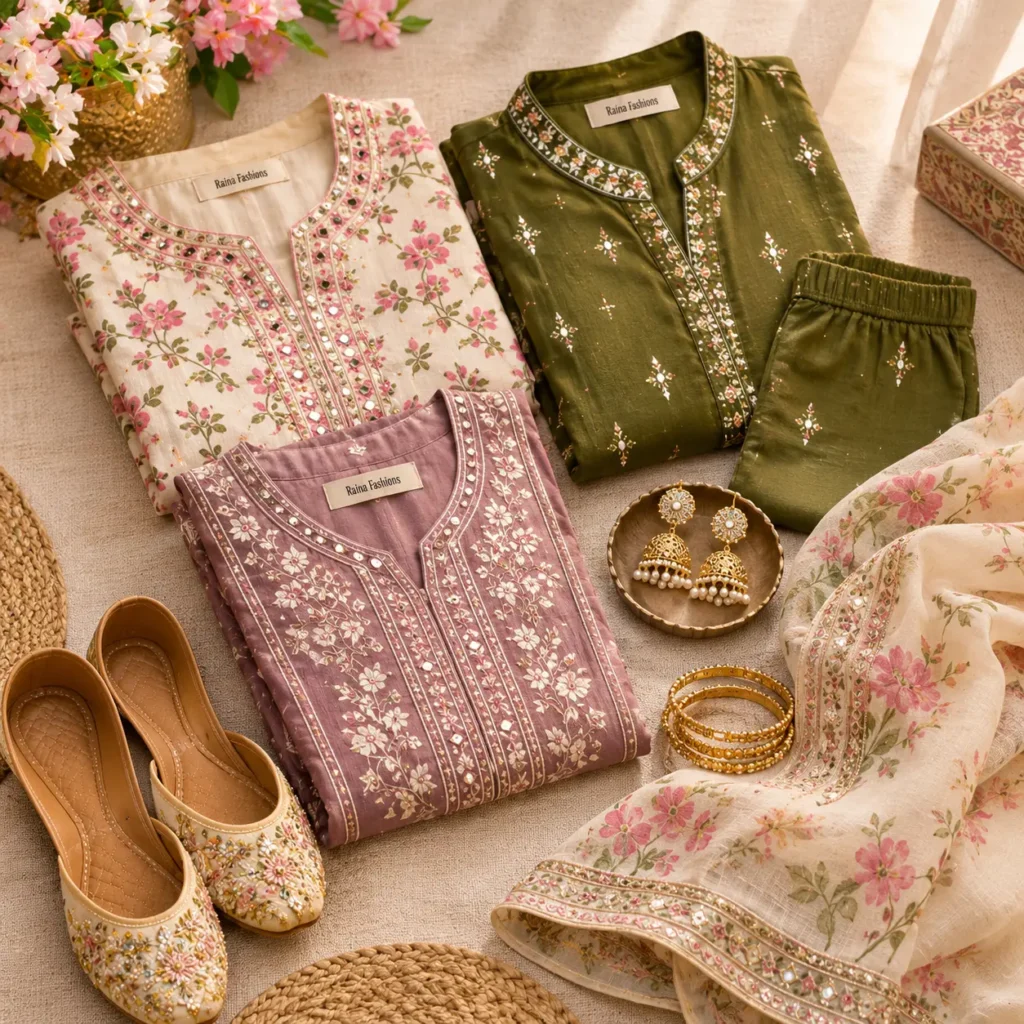
Choose a lightweight three-piece set with:
- Embroidery
- Mirror work
- Decorative neckline
- Statement dupatta
- Rich colour
This gives you a festive option that still feels comfortable.
Invest in Versatile Bottom Wear
Bottom wear is often overlooked, but it determines how many combinations you can create.
A good wardrobe could include:
Straight Pants
Keep at least two neutral pairs, such as white, beige, black, or olive.
They work with almost every kurti style.
Palazzos
Palazzos create a more relaxed silhouette and work well with A-line and straight kurtis.
Wide-Leg Trousers
These are useful for contemporary ethnic styling and co-ord looks.
Jeans
Jeans help you transform kurtis into Indo-Western outfits.
A good blue pair and a darker pair can give you several casual combinations.
Build a Small Dupatta Collection
Dupattas are one of the easiest ways to make the same kurti look different.
You do not need many.
A useful selection might include:
- One neutral dupatta
- One floral or printed style
- One festive dupatta
- One lightweight mulmul dupatta
Plain Kurti + Statement Dupatta
This combination is ideal for family gatherings and festive occasions.
Printed Kurti + Simple Dupatta
This keeps the outfit balanced.
A versatile dupatta collection allows you to reuse kurtis without making every outfit feel repetitive.
Use Jewellery to Change the Mood of an Outfit
Accessories can make simple ethnic clothing feel more intentional.
Keep a mix of everyday and statement jewellery.
For Everyday Wear
Choose:
- Studs
- Small hoops
- Minimal pendant
- Simple bracelet
For Festive Styling
Add:
- Jhumkas
- Statement earrings
- Gold-tone necklace
- Bangles
Anti-tarnish jewellery is especially useful if you want pieces that can work repeatedly across several outfits.
A simple cotton kurti can move from casual to festive simply by changing jewellery and footwear.
Keep Footwear Versatile
Shoes should work across several outfit types.
A practical ethnic footwear collection might include:
- Neutral juttis
- Comfortable flats
- Low block heels
- Sandals
- Loafers
Avoid buying shoes that match only one outfit.
Neutral footwear offers far more styling flexibility.
Choose Prints That Work Across Occasions
Prints add personality, but some are easier to repeat than others.
Useful options include:
- Florals
- Ajrakh-inspired prints
- Geometric motifs
- Small traditional patterns
- Stripes
- Handblock-style prints
Smaller or balanced prints generally move more easily between office, casual, and family settings.
Very bold designs can still work, but keep the rest of the styling simple.
Use Layers to Create New Looks
Layering is an underrated way to extend your wardrobe.
Try:
- Long ethnic jacket over a plain kurti
- Printed shrug with a solid outfit
- Dupatta used as a stole
- Short jacket over a co-ord set
Layers create visual variety without requiring entirely new outfits.
This works especially well during transitional weather or evening events.
Think in Outfit Combinations, Not Individual Pieces
One of the best ways to avoid overbuying is to ask:
How many outfits can I create with this piece?
Before purchasing a kurti, imagine at least three combinations.
For example:
Olive straight kurti
- With white pants for office
- With jeans for casual wear
- With festive dupatta for a family function
That is a much more useful purchase than a heavily embellished piece you can wear only once or twice.
Build a Small Capsule Ethnic Wardrobe
A versatile collection does not need to be huge.
You could start with:
- 2 straight cotton kurtis
- 2 printed A-line kurtis
- 1 short kurti
- 1 neutral kurti
- 1 co-ord set
- 1 festive three-piece suit
- 2 straight pants
- 1 palazzo
- 1 pair of jeans
- 3 dupattas
- 2 everyday jewellery pieces
- 2 festive jewellery pieces
- 2 versatile footwear options
This relatively small collection can create dozens of combinations.
Build Around Fabrics You Enjoy Wearing
A wardrobe is only useful if you actually enjoy wearing the clothes.
Consider:
- Cotton for everyday comfort
- Mulmul for lightweight dressing
- Cotton flex for structure
- Lightweight silk blends for festive occasions
Do not buy a fabric purely because it looks attractive online.
Think about:
- Weather
- Maintenance
- Breathability
- Fit
- How often you will wear it
Comfort usually determines whether an outfit becomes a favourite.
Consider Your Existing Jewellery and Accessories
Clothing does not exist in isolation.
Before buying a new kurti or suit, think about whether it works with:
- Jewellery you already own
- Existing bags
- Footwear
- Dupattas
- Bottom wear
This helps create a more cohesive wardrobe.
A versatile wardrobe is one where pieces naturally work together.
Avoid Common Wardrobe-Building Mistakes
Buying Too Many Similar Kurtis
Five almost identical straight kurtis will not create as much variety as a mix of silhouettes.
Choosing Pieces Only Because They Are Trending
Trends change quickly.
Buy something because it fits your lifestyle and personal style, not only because it is popular at the moment.
Ignoring Fabric Care
A beautiful outfit that requires difficult maintenance may not become a regular choice.
Buying Complete Looks Without Considering Separates
Look at every co-ord set or suit as individual pieces too.
If you can style them separately, you gain much more value.
Refresh Existing Ethnic Wear Instead of Replacing It
Before shopping for new pieces, look at what you already own.
You might be able to refresh a familiar outfit by:
- Changing the dupatta
- Adding new earrings
- Switching from leggings to straight pants
- Wearing a kurti with jeans
- Adding a belt
- Changing footwear
- Layering with a jacket
Sometimes a wardrobe feels repetitive because of styling, not because you need more clothes.
Create Different Looks for Different Occasions
A versatile wardrobe should move easily between occasions.
Office
Straight cotton kurti + trousers + studs + flats
Casual Outing
Short kurti + jeans + hoops + sneakers
Family Function
A-line kurti + statement dupatta + jhumkas + juttis
Festive Celebration
Three-piece suit + gold-tone jewellery + block heels
Travel
Cotton co-ord set + flats + minimal accessories
The same core wardrobe can support all these situations.
Conclusion
Building a versatile collection of ethnic wear for women is less about owning more clothes and more about choosing pieces that work well together.
Start with dependable kurtis, neutral bottoms, a few statement colours, one or two co-ord sets, lightweight festive wear, versatile dupattas, and jewellery that can shift an outfit from casual to dressy.
Pay attention to fabric, fit, comfort, and repeatability. Before purchasing something new, think about how many ways you can style it with pieces you already own.
At Raina Fashions, we believe a useful wardrobe should make everyday dressing easier. The right mix of kurtis, co-ords, accessories, and occasion wear can give you plenty of variety without filling your cupboard with pieces you rarely wear.
Frequently Asked Questions
What ethnic wear should every woman have?
A versatile wardrobe can include straight kurtis, A-line kurtis, cotton kurtis, a co-ord set, neutral bottoms, a festive three-piece suit, useful dupattas, and a few jewellery pieces.
How many kurtis do I need for a versatile wardrobe?
There is no fixed number, but five to seven well-chosen kurtis in different cuts, colours, and prints can create many outfit combinations.
Which fabrics are best for everyday ethnic wear?
Cotton, mulmul, cotton flex, and breathable cotton blends are useful for everyday dressing. Choose fabrics based on weather, comfort, fit, and maintenance needs.
How can I make ethnic wear look modern?
Pair short or straight kurtis with jeans or wide-leg trousers, try co-ord sets, use minimal jewellery, and mix traditional pieces with contemporary accessories.
How can I make one kurti look different each time?
Change the bottom wear, dupatta, jewellery, footwear, bag, or layering piece. A versatile kurti can work across casual, office, and occasion styling.
Which colours should I include in an ethnic wardrobe?
Start with neutrals such as ivory, beige, black, navy, and olive. Then add colours such as mustard, maroon, wine, teal, pink, and rust.
Are co-ord sets useful in an ethnic wardrobe?
Yes. They work as complete outfits and can also be worn as separates, giving you more styling possibilities from one purchase.