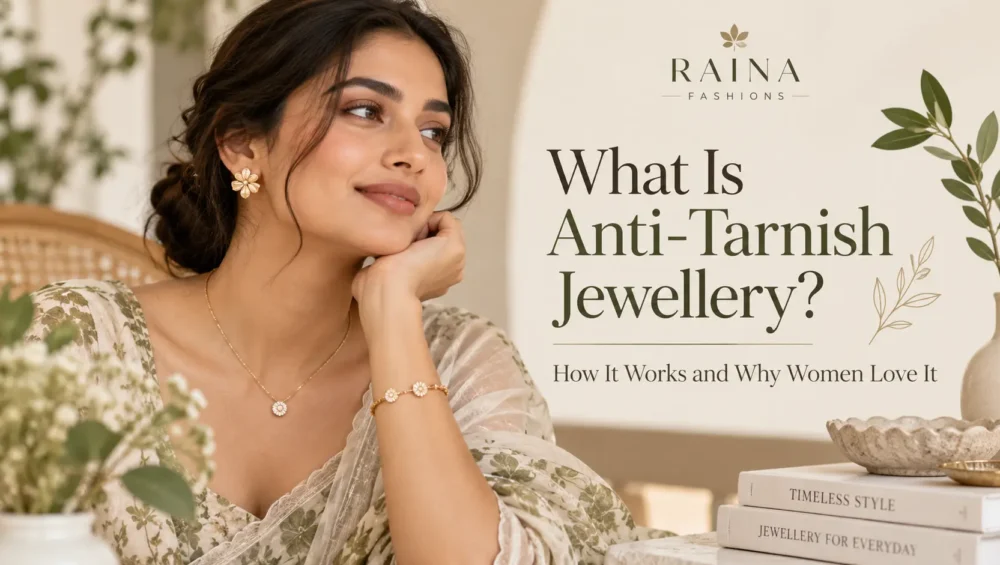
Jewellery can instantly make an everyday outfit feel more polished. A simple necklace can elevate a plain kurti, while a pair of elegant earrings can complete an office, brunch, or festive look. The challenge is keeping those pieces looking good when they are worn regularly.
That is where anti tarnish jewellery has become increasingly popular.
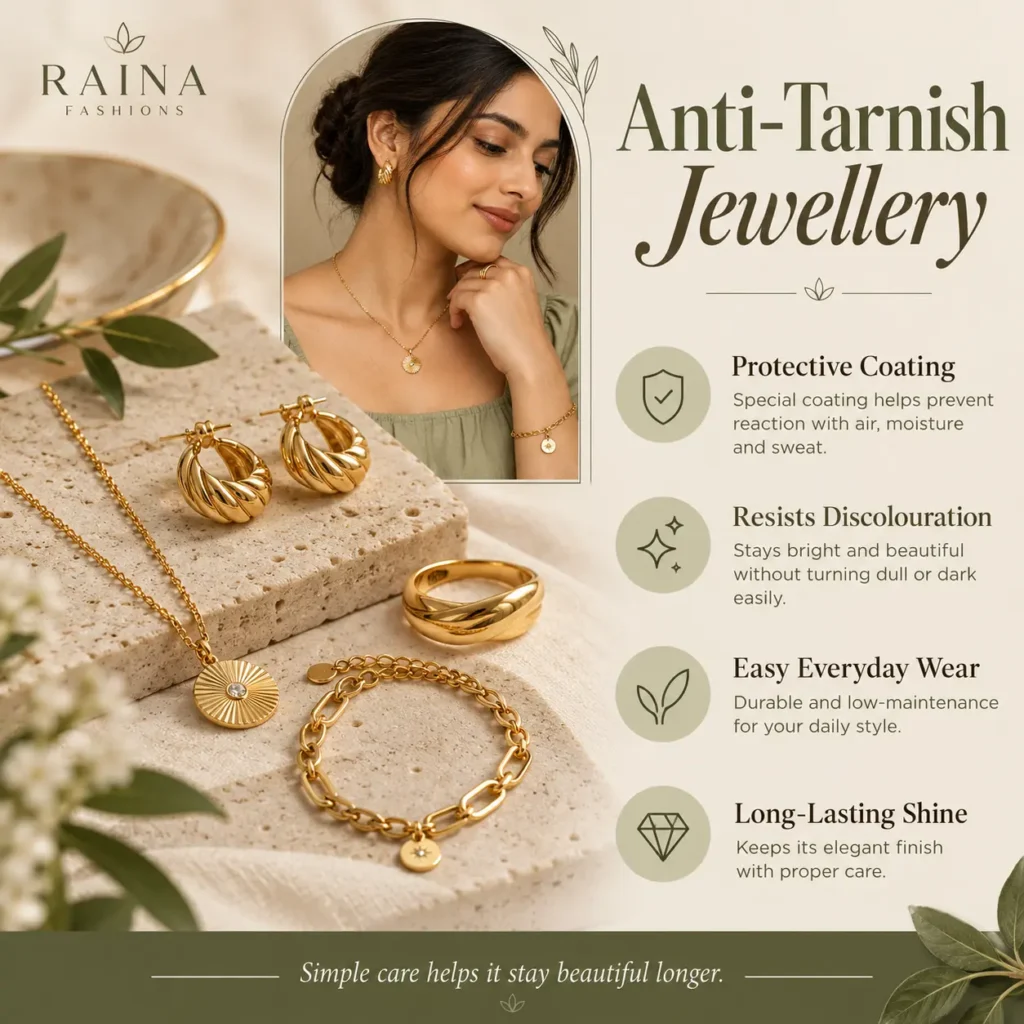
Unlike ordinary fashion jewellery that may lose its finish quickly, anti-tarnish pieces are designed to resist discolouration for longer. Depending on how they are made, they may use stainless steel, protective plating, specialised coatings, or other finishing techniques to help reduce exposure to moisture, air, sweat, and everyday environmental factors.
However, “anti-tarnish” does not mean completely maintenance-free or permanently resistant to every kind of wear. Understanding how it works can help you choose better pieces and care for them properly.
What Is Anti-Tarnish Jewellery?
Anti tarnish jewellery refers to jewellery designed or treated to slow down tarnishing, fading, dullness, or discolouration.
Tarnishing happens when certain metals react with substances in their surroundings. Moisture, air, sweat, perfumes, cosmetics, and chemicals can all influence how quickly jewellery changes appearance.
Anti-tarnish pieces are made to reduce this reaction.
Depending on the product, this may be achieved through:
- Stainless steel construction
- Protective surface coatings
- PVD or similar plating processes
- Gold-tone plating over a durable base
- Corrosion-resistant metal combinations
- Sealing or finishing treatments
The exact method varies by manufacturer, so it is always useful to check the product details before buying.
Why Does Jewellery Tarnish?
To understand anti-tarnish jewellery, it helps to first understand why jewellery changes colour.
Exposure to Air
Some metals react with oxygen or compounds in the air over time. This can cause the surface to become darker or less shiny.
Moisture and Humidity
High humidity can speed up reactions on certain metal surfaces.
This is particularly relevant in warm and humid climates where jewellery may regularly come into contact with moisture.
Sweat
Sweat contains water, salts, and other compounds that can affect some jewellery finishes, especially when pieces are worn for long periods.
Perfume and Cosmetics
Perfume, deodorant, moisturiser, hairspray, and makeup can leave residues on jewellery.
Repeated exposure may affect plating or finish over time.
Cleaning Chemicals
Household cleaners, chlorine, and harsh chemicals can damage jewellery coatings and plating.
This is why removing jewellery before cleaning or swimming is usually a sensible habit.
How Does Anti-Tarnish Jewellery Work?
The principle is fairly simple: protect the underlying metal from the elements that commonly contribute to tarnishing.
Protective Coatings Create a Barrier
Some anti tarnish jewellery is covered with a protective layer that acts as a barrier between the metal and the surrounding environment.
This reduces direct contact with:
- Air
- Moisture
- Sweat
- Skin oils
- Everyday residues
The effectiveness depends on the coating quality, thickness, application method, and how the jewellery is used.
Stainless Steel Offers Greater Resistance
Stainless steel is commonly used in modern jewellery because it is durable and naturally more resistant to corrosion than many softer base metals.
This makes stainless steel jewellery a practical choice for everyday pieces such as:
- Necklaces
- Bracelets
- Earrings
- Pendants
- Rings
It also creates a strong base for gold-tone or other finishes.
PVD Coating Can Improve Durability
Some jewellery uses Physical Vapour Deposition, commonly known as PVD coating.
In this process, a thin decorative layer is deposited onto the base material under controlled conditions.
PVD-coated jewellery is often valued because the finish can be more durable than some traditional plating methods.
However, the quality can vary between manufacturers, and even PVD-coated jewellery benefits from careful handling.
Is Anti-Tarnish Jewellery the Same as Waterproof Jewellery?
Not necessarily.
The terms are sometimes used together in product descriptions, but they do not mean exactly the same thing.
Anti-tarnish generally refers to resistance to dulling or discolouration.
Water-resistant jewellery may tolerate occasional contact with water better than some conventional fashion jewellery.
Neither term should automatically be interpreted as meaning that the jewellery can be exposed continuously to water, chlorine, perfume, or chemicals without any effect.
For longer-lasting wear, it is still sensible to remove jewellery before:
- Swimming
- Showering for long periods
- Exercising heavily
- Cleaning with chemicals
- Applying perfume directly over the jewellery
What Makes Stainless Steel Anti-Tarnish Jewellery Popular?
Stainless steel has become a popular material for everyday accessories because it offers a useful balance of durability, appearance, and practicality.
It Is Suitable for Regular Wear
Stainless steel is relatively strong, making it useful for pieces that are worn frequently.
Bracelets, earrings, pendants, and chains can handle regular use better than some very soft materials.
It Holds Its Shape Well
Durability matters for jewellery that is worn often.
Chains, clasps, earrings, and bracelets need enough strength to withstand repeated handling.
It Works Well With Modern Designs
Stainless steel can be used for:
- Minimal necklaces
- Contemporary earrings
- Charm bracelets
- Roman numeral designs
- Evil eye pendants
- Beaded necklaces
- Everyday chains
This makes it suitable for both modern and Indo-Western styling.
What Are the Benefits of Anti-Tarnish Jewellery?
The appeal goes beyond appearance.
1. It Can Stay Presentable for Longer
A well-made anti-tarnish piece is designed to resist dulling and discolouration better than jewellery with an unprotected surface.
That can make it more practical for regular use.
2. It Is Easy to Style Every Day
Many anti tarnish jewellery for women designs are minimal enough for repeated wear.
A simple necklace, bracelet, or pair of earrings can move easily between:
- Office wear
- Daily kurtis
- Co-ord sets
- Jeans
- Casual dresses
- Festive outfits
3. It Can Offer Better Everyday Value
Jewellery that remains wearable for longer can offer better value than pieces that lose their finish after only a few uses.
Quality, of course, still depends on the materials and manufacturing process.
4. It Usually Requires Simple Care
You generally do not need an elaborate cleaning routine.
A few basic habits can help preserve the finish.
Anti-Tarnish Jewellery vs Regular Fashion Jewellery
The terms can overlap, but there are some practical differences.
| Feature | Anti-Tarnish Jewellery | Regular Fashion Jewellery |
|---|---|---|
| Tarnish resistance | Designed to resist tarnishing for longer | May tarnish faster depending on material |
| Everyday wear | Often suitable | Depends heavily on finish |
| Base material | May use stainless steel or protected metals | Can use many different base metals |
| Maintenance | Usually simple but still required | May require more careful handling |
| Water resistance | Varies by product | Often limited |
| Longevity | Usually better when properly cared for | Can vary significantly |
The important thing is not to rely on the label alone. Check what the jewellery is actually made from.
Is Anti-Tarnish Jewellery Good for Everyday Wear?
Yes, it can be a very practical choice for daily styling.
Women who regularly wear jewellery to work, college, casual outings, or family gatherings may appreciate pieces that require less maintenance.
For example:
For Office Wear
Try:
- Small hoops
- Minimal earrings
- Delicate pendant necklaces
- Simple bracelets
- Fine chains
These add polish without feeling excessive.
For Casual Wear
Pair a simple anti-tarnish necklace with:
- Cotton kurtis
- Short kurtis
- Jeans
- Co-ord sets
- Dresses
For Festive Styling
Anti-tarnish pieces can also complement lighter festive clothing.
Choose statement earrings, layered necklaces, or bracelets to give a simple kurti a more occasion-ready look.
How to Style Anti-Tarnish Jewellery With Kurtis
Jewellery and kurtis work particularly well together because you can change the mood of an outfit simply by changing the accessories.
With Printed Kurtis
Keep jewellery relatively simple.
Try:
- Small hoops
- Studs
- Fine chains
- Minimal bracelets
This prevents the accessories from competing with the print.
With Plain Kurtis
A plain kurti gives you more freedom.
You can add:
- Statement earrings
- Layered necklaces
- Gold-tone chains
- Charm bracelets
- Bold pendants
With Office Kurtis
Choose clean and understated designs.
Simple gold-tone earrings or a delicate pendant can make the outfit feel more polished without becoming too dressy.
How to Care for Anti-Tarnish Jewellery
The phrase anti-tarnish does not mean you should treat jewellery roughly.
Care still matters.
Keep It Away From Harsh Chemicals
Remove jewellery before using:
- Household cleaners
- Chlorine
- Strong detergents
- Hair colour products
These chemicals may affect protective coatings.
Apply Perfume Before Wearing Jewellery
Perfume should ideally go on your skin first.
Allow it to dry, then put on your jewellery.
This reduces direct chemical exposure.
Wipe Jewellery After Wearing
A soft, dry cloth can remove sweat, skin oils, and surface residue.
This simple habit can help maintain shine.
Store Pieces Separately
Keep jewellery in:
- Individual pouches
- Jewellery boxes
- Soft compartments
This helps reduce scratching and friction between pieces.
Avoid Unnecessary Water Exposure
Even if a product is marketed as water-resistant, repeated unnecessary exposure may shorten the life of its finish.
Removing jewellery before swimming or prolonged bathing is still a good habit.
How Long Does Anti-Tarnish Jewellery Last?
There is no single answer.
Its appearance over time depends on:
- Base metal
- Coating quality
- Plating method
- Frequency of wear
- Exposure to moisture and chemicals
- Storage
- Individual skin chemistry
- Care routine
Well-cared-for jewellery generally maintains its finish better than jewellery exposed repeatedly to harsh conditions.
Be cautious of claims suggesting that any fashion jewellery will remain completely unchanged forever.
What Should You Check Before Buying?
Before adding a piece to your jewellery collection, read the product information carefully.
Check the Base Material
Look for details such as stainless steel rather than relying only on terms such as “gold finish.”
Check the Coating or Finish
If available, see whether the brand specifies:
- Gold-tone coating
- PVD finish
- Protective coating
- Other plating details
Check the Size
Bracelets, necklaces, hoops, and rings should be checked for size before ordering.
Consider How You Will Wear It
Choose pieces that fit your lifestyle.
If you want everyday jewellery, select designs that can work with several outfits rather than only one specific occasion.
Is Anti-Tarnish Jewellery Worth Buying?
For many women, yes.
Its biggest advantage is practicality.
A versatile pair of earrings, bracelet, or pendant that stays attractive with regular wear can be more useful than having many delicate pieces that rarely leave the jewellery box.
The best approach is to choose thoughtfully.
Focus on:
- Material
- Finish
- Design
- Comfort
- Versatility
- Care requirements
That way, your jewellery becomes something you genuinely enjoy wearing rather than something you constantly worry about preserving.
Conclusion
Anti tarnish jewellery is designed to resist the dullness, fading, and discolouration that can affect conventional fashion jewellery over time. Depending on the product, that protection may come from stainless steel, PVD plating, specialised coatings, or other surface treatments.
It is especially useful for women who want jewellery that works across daily wear, office styling, kurtis, co-ord sets, and casual occasions.
However, anti-tarnish does not mean indestructible. Perfume, chemicals, moisture, friction, and poor storage can still affect jewellery over time.
At Raina Fashions, we believe jewellery should be easy to style and practical enough to enjoy regularly. Choosing well-made pieces and following a few simple care habits can help your favourite earrings, bracelets, necklaces, and pendants stay beautiful for longer.
Frequently Asked Questions
What does anti-tarnish jewellery mean?
Anti-tarnish jewellery is designed or treated to resist dullness, fading, oxidation, or discolouration for longer than untreated fashion jewellery.
Does anti-tarnish jewellery never tarnish?
No. Anti-tarnish means resistant, not completely immune. The longevity of the finish depends on the material, coating, frequency of wear, exposure, and care.
Is stainless steel good for anti-tarnish jewellery?
Yes. Stainless steel is widely used because it is durable and more resistant to corrosion than many common fashion-jewellery base metals.
Can anti-tarnish jewellery get wet?
Some pieces tolerate occasional water exposure better than conventional jewellery, but frequent exposure to water, chlorine, sweat, or chemicals may still affect the finish.
Can I wear anti-tarnish jewellery every day?
Yes, many designs are suitable for regular wear. Minimal earrings, necklaces, pendants, and bracelets can be particularly practical for everyday styling.
How do I clean anti-tarnish jewellery?
Gently wipe it with a clean, soft, dry cloth after wearing. Avoid abrasive cleaners and harsh chemicals unless the manufacturer’s care instructions specifically recommend them.
Is anti-tarnish jewellery good with kurtis?
Yes. Minimal anti-tarnish pieces work well with printed and office kurtis, while statement earrings and necklaces can elevate plain or festive styles.
What is the difference between anti-tarnish and waterproof jewellery?
Anti-tarnish refers to resistance to discolouration, while waterproof claims relate to water exposure. Product performance can vary, so always check the manufacturer’s specifications.





1 Comment
Anti-tarnish jewellery is a practical option for anyone who loves wearing accessories regularly but wants them to maintain their appearance. It is useful to understand how these pieces are made and what care they still need to stay in good condition. I particularly like jewellery that combines attractive designs with everyday convenience, as it makes styling much easier. Knowing a little about anti-tarnish finishes can also help buyers choose pieces that suit their lifestyle and preferences.