A kurti is one of the most versatile outfits in an Indian woman’s wardrobe. You can wear it to work, while travelling, for a casual outing, or even for a festive gathering. However, the same kurti style may look completely different on two people. The reason is simple: every body shape has different proportions, and certain silhouettes naturally complement them better.
Choosing the right Kurti for your body type is not about following rigid fashion rules or hiding parts of your body. It is about understanding proportions and choosing silhouettes that make you feel comfortable, balanced, and confident.
From straight-cut kurtis to flowy A-line styles, there are many options available today. Once you understand what works with your natural shape, shopping for kurtis becomes much easier.
Why Does Body Shape Matter When Choosing a Kurti?
The cut, length, neckline, print, and fabric of a kurti can influence how your overall outfit looks. A style that adds structure to one body shape may add unnecessary volume to another.
For example, a straight-cut kurti creates a clean vertical line, while an Anarkali adds movement and volume toward the lower half of the body. Similarly, vertical prints can create an elongated appearance, while oversized motifs tend to draw attention.
Understanding different types of kurtis helps you choose an outfit based on more than just colour or design. You can also consider how the silhouette works with your shoulders, waist, hips, and height.
Kurti Styles for an Apple-Shaped Body
An apple-shaped body usually carries more fullness around the midsection, while the arms and legs may appear comparatively slimmer.
The goal does not have to be to hide your waist. Instead, choose silhouettes that create a smooth vertical flow.
Styles to Consider
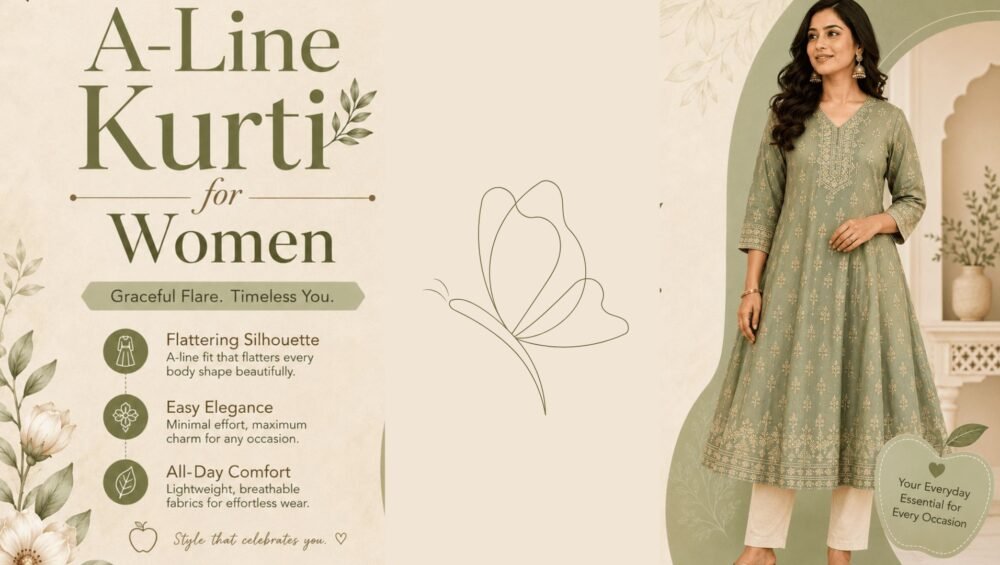
A-line kurtis work particularly well because they gradually widen from the upper body toward the hem. Straight-cut kurtis can also create a structured and elongated appearance.
V-neck and slightly open necklines may help create a longer visual line around the upper body.
Lightweight fabrics such as cotton, rayon, and soft blends generally fall more gracefully than very stiff materials.
Avoid excessive detailing or bulky embellishments around the waist if you prefer a cleaner silhouette.
Kurti Styles for a Pear-Shaped Body
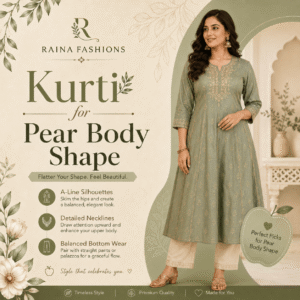
A pear-shaped body generally has narrower shoulders with relatively fuller hips and thighs.
When choosing a Kurti for your body type, you can look for designs that create visual balance between your upper and lower body.
A-line kurtis are an excellent option because they move naturally over the hips without appearing overly fitted. Kurtis with interesting necklines, embroidery around the shoulders, or detailed sleeves can also draw attention upward.
You may want to experiment with brighter colours or prints on the upper half of the kurti while keeping the lower portion relatively simple.
Pairing your kurti with straight pants or well-fitted palazzos can complete the balanced look.
Kurti Styles for an Hourglass-Shaped Body
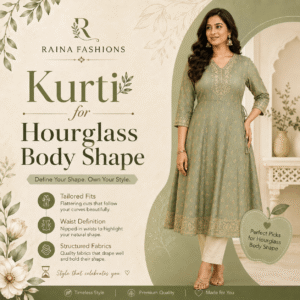
An hourglass figure usually has balanced shoulders and hips with a more defined waist.
Many kurti silhouettes work well with this shape. However, styles that follow the natural waistline can highlight the body’s proportions beautifully.
Fitted straight kurtis, panelled kurtis, wrap-style kurtis, and structured A-line designs are good options.
You can also experiment with waist detailing, side ties, belts, or slightly fitted silhouettes if that matches your personal style.
Among the many types of kurtis available, avoid automatically choosing oversized silhouettes simply because they are trendy. A slightly structured fit may complement your proportions more effectively.
Kurti Styles for a Rectangle-Shaped Body
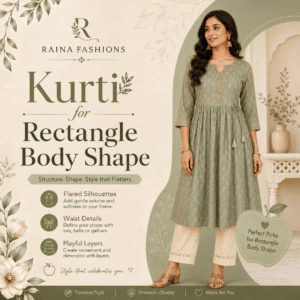
A rectangular body shape usually has shoulders, waist, and hips that appear relatively similar in width.
If you want to create more definition, choose kurtis that add shape, movement, or visual interest.
Anarkali kurtis, gathered styles, flared silhouettes, peplum-inspired kurtis, and layered designs can work beautifully.
You can also explore:
- Kurtis with belts or waist detailing
- Printed or embroidered panels
- Flared hems
- Statement sleeves
- Contrasting dupattas
- Side-slit designs
Soft fabrics with movement can help add dimension without making the outfit feel heavy.
Kurti Styles for an Inverted Triangle Body
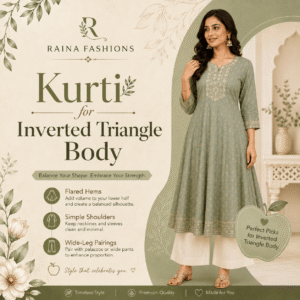
Women with an inverted triangle shape generally have broader shoulders with relatively narrower hips.
For this shape, you may prefer kurtis that keep the shoulder area simple while adding movement toward the lower half.
A-line kurtis, flared kurtis, and styles with wider hems can create visual balance. Avoid very bulky shoulder detailing if you do not want extra attention in that area.
V-necks, scoop necks, and simple round necklines can complement this body shape nicely.
You can pair the kurti with palazzos, wide-leg pants, or comfortable trousers to add proportion to the lower half.
Consider Your Height Along With Body Shape
Body shape is only one part of choosing the perfect outfit. Your height can also influence which kurti lengths and patterns you prefer.
Petite women may find that knee-length or slightly shorter kurtis create a longer-looking silhouette. Vertical prints, smaller motifs, and monochrome combinations can also work beautifully.
Taller women can experiment with longer kurtis, bold prints, layered styles, and larger motifs.
However, these are only styling guidelines. The best Kurti for your body type is ultimately the one in which you feel comfortable and confident.
Choose the Right Fabric
Fabric can completely change the way a kurti falls on your body.
Cotton is an excellent choice for everyday, office, and summer wear because it feels comfortable and breathable. Cotton flex offers a slightly more structured appearance while still being practical for everyday outfits.
Rayon and similar flowy fabrics create softer silhouettes, while silk blends and heavier fabrics can add structure for festive occasions.
If you are shopping online, read the fabric description carefully rather than choosing a kurti based only on the photographs.
Prints and Colours Can Make a Difference
Print placement also affects the overall appearance of a kurti.
Vertical patterns tend to create a longer visual line, while horizontal designs can add width. Small and medium prints generally offer a balanced look, whereas large motifs create a bolder statement.
Darker colours may create a streamlined appearance, but you do not need to limit yourself to black or neutral shades. Rich jewel tones, earthy colours, pastels, and vibrant prints can all look beautiful when combined with the right silhouette.
The key is to consider the complete outfit rather than looking at colour alone.
Don’t Forget Comfort and Fit
Even the most flattering design will not work if you are uncomfortable wearing it.
Check whether the kurti allows you to move freely around the shoulders, arms, bust, and hips. Pay attention to sleeve fit, armholes, side slits, and overall length.
When exploring different types of kurtis, choose a size that follows your body comfortably rather than selecting something extremely tight in the hope of creating a slimmer appearance.
A well-fitted kurti generally looks more polished than one that is either too tight or excessively loose.
Your Personal Style Matters Most
Fashion advice can help you understand proportions, but it should never become a restriction.
If you love oversized kurtis, wear them. If bright prints make you happy, choose them. If you prefer simple cotton styles over heavily embroidered outfits, let your wardrobe reflect that preference.
Finding the right Kurti for your body type should ultimately make shopping easier, not limit your choices.
At Raina Fashions, we believe a good kurti should bring together colour, comfort, fabric quality, stitching, and thoughtful finishing. Explore different silhouettes, try new combinations, and choose pieces that make you feel comfortable and confident every time you wear them.
FAQ Section
Which kurti is best for an apple-shaped body?
A-line and straight-cut kurtis usually work well for apple-shaped bodies because they create a smooth vertical silhouette. V-necklines and lightweight fabrics can also help create a balanced overall look.
Which kurti suits a pear-shaped body?
A-line kurtis are a popular choice for pear-shaped bodies. Styles with detailing around the neckline or shoulders can help balance narrower shoulders with fuller hips.
Which type of kurti looks good on an hourglass figure?
Straight-cut, panelled, wrap-style, and structured A-line kurtis can complement an hourglass figure. Styles that gently follow the waist can highlight naturally balanced proportions.
Which kurti style is best for short women?
Petite women can try knee-length or moderately long kurtis, vertical prints, smaller motifs, and monochrome combinations to create a more elongated appearance.
How do I choose the right kurti size online?
Check the brand’s size chart and compare bust, waist, and hip measurements with your own. Also review the fabric, fit description, kurti length, and whether the design is fitted or relaxed.